
Breaking Through Drug Discovery's Computational Challenge: Chugai's Path Toward Practical Quantum Computing
- Innovation
- R&D
- DX
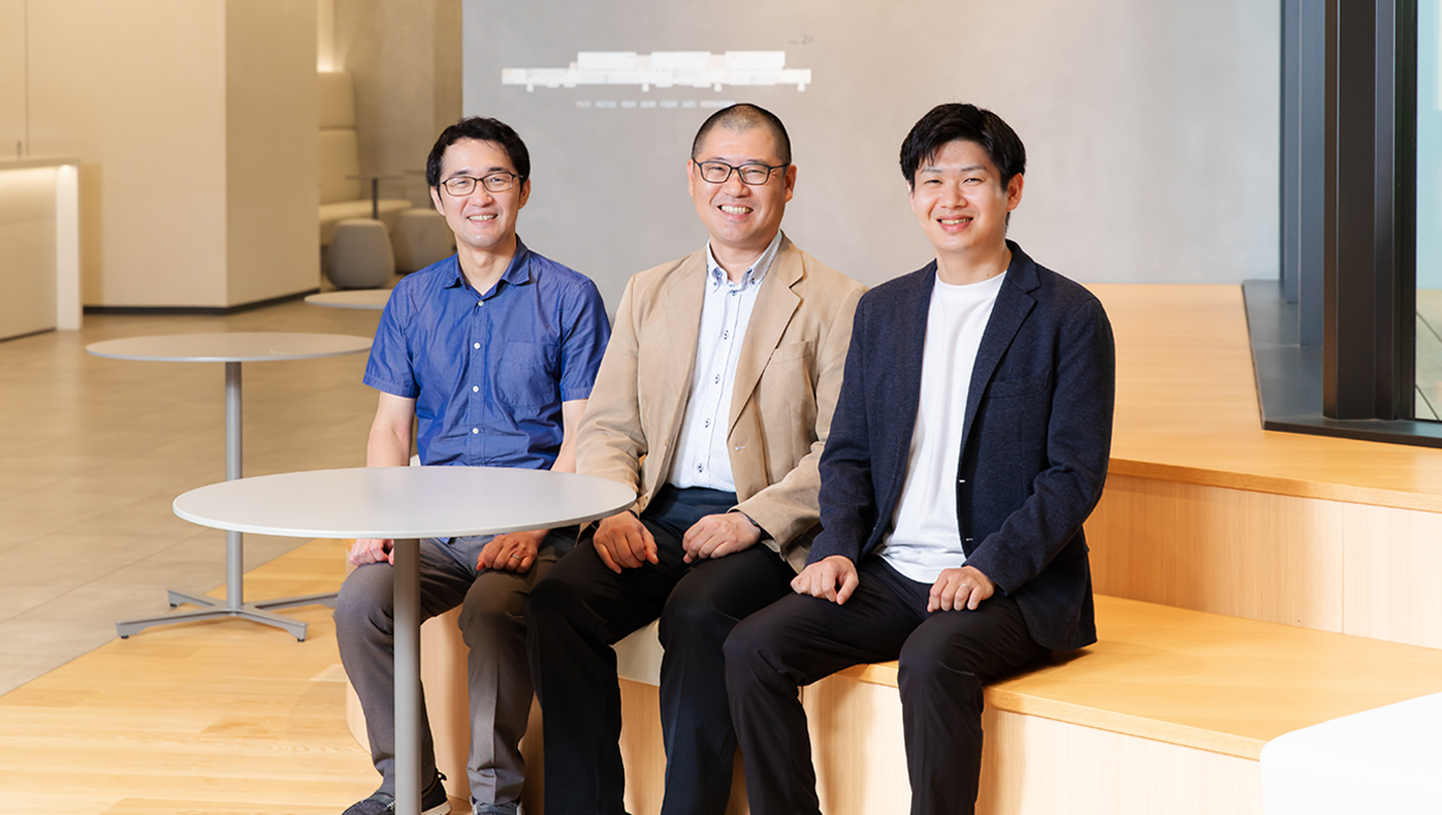


Drug discovery is a complicated process of identifying the most promising clinical candidates from an enormous number of molecular combinations. Improving the precision of this process is considered the key to the next breakthrough. Chugai Pharmaceutical is taking on this challenge through a new approach: high-precision molecular simulation designed with the future use of quantum computing in mind. This article explores the background and current status of these efforts through a conversation with Akihiko Arakawa of the Digital Strategy Planning Department, who leads Chugai’s quantum initiative for drug discovery; Taisei Osawa of the Discovery Chemistry Department, who is responsible for exploration in terms of chemistry; and Kenji Sugisaki of Deloitte Tohmatsu, who scientifically leads the joint PoC study with Chugai. This article also highlights a research paper (IEEE International Conference on Quantum Computing and Engineering (QCE), to be published.)—detailing a study conducted as part of this project—in which the interaction energy between water molecules was calculated with high precision using quantum chemistry simulations. *
*At this stage, the simulations discussed in this article were conducted on a simulator rather than an actual quantum computer. We also estimated the computational resources required for future implementation.
Drug Discovery's "Computational Challenge"
In novel drug discovery, researchers have long faced a "computational challenge."
The efficacy of a drug depends largely on its binding affinity for a target molecule. Ideally, if we could simulate this binding with such precision that it captures “the behavior of each individual electron,” which is an immensely complicated task, it would become possible to rationally identify high-quality drug candidates. Sugisaki of Deloitte Tohmatsu explains the difficulty as follows:
"A molecule consists of atoms and electrons. The electrons, all carrying a negative charge, repel one another while shifting their distribution according to the positions of the atomic nuclei. With just one or two electrons, this is still manageable, but when atoms and electrons number in the tens or hundreds, we must simulate a complex scenario where the electrons 'move while watching one another's movements.' Consequently, the required computational power increases exponentially, making it computationally intractable for conventional computers."
This challenge is also familiar to Osawa of Chugai's Discovery Chemistry Department, who works at the forefront of small- and mid-size molecule drug discovery.
"In drug discovery, when we evaluate molecular motion and conformational variability, we rely on molecular dynamics (MD) simulations based on classical force fields, which are highly practical. At the same time, to precisely predict the energies that directly govern a drug's binding affinity, quantum chemical calculations that capture the behavior of electrons themselves are indispensable. What we now strongly hope for is the arrival of computers capable of carrying out such calculations within a realistic timeframe."
A quantum computer is a system that operates on the principles of quantum mechanics. It can inherently simulate quantum-mechanical entities, such as electrons, without incurring an exponential explosion in computational complexity. This capability offers the potential to overcome the "computational challenge" that has long hindered conventional computers.
AI and Quantum Computing: The Synergistic Interplay of Induction and Deduction
At Chugai, we have also been pioneering AI-driven drug discovery for over a decade, leveraging platforms including MALEXA.* AI inherently employs an inductive approach, extracting patterns from massive datasets, which makes it highly effective in data-rich domains. On the other hand, when addressing challenging therapeutic targets with limited prior data or exploring novel drug modalities, relying solely on AI-based predictions can be difficult.
"In these areas, we believe that a deductive approach—such as computational chemistry using quantum computers, which calculates molecular behavior based on the laws of physics—will demonstrate its full potential," says Osawa.
*MALEXA (MAchine LEarning x Antibody): Chugai's proprietary AI drug discovery platform combining machine learning and antibody technologies. It uses AI to analyze and predict from an enormous number of amino acid sequence combinations, with the aim of shortening development timelines for antibody drugs and improving their probability of success.
Why Chugai Is Moving into Quantum: A Cross-Functional Search for Use Cases
Arakawa, who spearheads quantum computing initiatives at Chugai, first advocated for the research of quantum-enabled drug discovery within the company more than five years ago.
"During my initial pitch, the then head of the Research Division stopped my presentation at the very first slide, bluntly stating that securing approval would be highly unlikely," Arakawa recalls with a smile. "The rejection stemmed from the proposal's reliance on external trends—arguing that we should adopt quantum computing simply because it was garnering global attention or to avoid falling behind. It was a stark reminder that we needed to dig deeper into our intrinsic motivation: what we fundamentally wanted to achieve, and the specific value this technology would bring to Chugai's drug discovery. After three months of refining our strategy around these core questions, I presented the revised proposal. This time, they heard me out to the end, and it was officially approved."
Guided by the conviction that "achieving high-speed, high-precision computations will allow us to rationally and efficiently screen candidate molecules, ultimately delivering high-quality drugs to patients faster," Arakawa has been driving the exploration and implementation of advanced computational technologies, including quantum computing.
Subsequently, a cross-functional initiative was launched to explore use cases for quantum computing spanning drug discovery, clinical development, and pharmaceutical manufacturing.
"In exploring use cases, we focused our discussions on two axes: (1) capabilities unique to quantum computers, and (2) potential applications for Chugai's R&D as this nascent technology matures. At the intersection of these two emerged the very theme of this project: high-precision quantum chemical computations envisioned for use in small- and mid-sized molecule drug discovery."
Arakawa says he was propelled forward by Chugai's R&D culture, which is deeply rooted in technology-driven drug discovery.
"Chugai has repeatedly established competitive technologies—such as antibody drugs and mid-sized molecule drug discovery—often despite initial skepticism. Rather than dismissing ideas as impossible based on preconceptions, we believe in trying them ourselves. We verify them firsthand and make data-driven decisions. We are taking this exact same approach with quantum computing—accumulating small-scale validations and continuously updating our roadmap. We want to nurture it into a competitive technology for the future."
Collaborative Validation with Academia and Partner Companies: Why Start with Water Molecules?
In parallel with the search for use cases, Chugai launched a joint validation project with Sugisaki of Deloitte Tohmatsu, an expert in quantum chemistry, to develop a method for precisely calculating intermolecular interactions using a quantum computer (https://www.deloitte.com/jp/ja/about/press-room/nr20241119.html).
Part of the results was published as a preprint in 2025 (Y. Tachi, A. Arakawa, T. Osawa, M. Terabe, K. Sugisaki, IEEE International Conference on Quantum Computing and Engineering (QCE), to be published.)
The paper addresses the interaction between two water molecules. While this may seem like an overly simple theme at first glance, there is a clear strategic aim behind it: to establish a robust computational framework itself before tackling the complexities of the complex system of protein–drug binding.
"Our ultimate goal is to accurately simulate the interactions between drug molecules and proteins. However, since there has been virtually no research on calculating intermolecular interaction energies with a quantum computer, we first need to establish a framework capable of performing such calculations. As a starting point, we focused on the interaction between water molecules—a system that is small yet fundamentally important," says Sugisaki.
In the paper, using a quantum computer simulator, the team proposed a method that reduces the required computational resources—specifically, the number of qubits and quantum gates—while maintaining theoretically high precision, with an error margin of just 0.02 kcal/mol.
What does this "0.02 kcal/mol" mean? Osawa explains its significance.
"The benchmark for accurately predicting chemical reactions is known as chemical accuracy, which is 1 kcal/mol. Achieving even this benchmark is an extremely difficult feat, but if you want to make a drug twice as potent—that is, to halve the required dose—you need to accurately distinguish an even finer difference of roughly 0.4 kcal/mol. By contrast, the 0.02 kcal/mol achieved this time represents an exceptionally high level of precision, with almost no deviation from the theoretical value."
Of course, this was a validation using a simple system of water molecules, and applying it directly to the complex molecular systems involved in drug discovery will still require further technical breakthroughs. Nevertheless, if this level of precision can be achieved with larger molecules in the future, the selection of promising compounds will become dramatically more efficient, greatly accelerating the drug discovery process. That is the research team's firm conviction.
"Through this joint validation, I actually ran code myself in a virtual quantum computing environment and was able to gain firsthand experience of what today's technology can and cannot do. I want to build on this as we move into our next ideas and the next steps in this research," says Osawa.
Ecosystem for Drug Discovery and Quantum Computing
The industrial application of quantum computers cannot be accomplished by any single company alone. Chugai believes that collaboration is indispensable among academia, which drives theory and algorithms; experts who provide a broad perspective on hardware and methodology selection; and pharmaceutical companies that articulate the real-world challenges faced in drug discovery. "In industrial applications, you need to discern which parts you cannot compromise on and which parts you can realistically compromise on," says Sugisaki.
Sugisaki himself has navigated a unique career path, transitioning from being a leading authority on quantum chemistry in Japanese academia into the world of consulting. This "experience of moving back and forth across multiple fields," he says, "is precisely what is essential for quantum drug discovery." Arakawa echoes this sentiment, commenting:
"Those involved in the quantum field may occupy different positions, but they share a common aspiration: to harness the potential of quantum technology for the benefit of society. That is precisely why I believe we should build an ecosystem that spans corporations, universities, startups, and the public sector. Rather than working in isolation, Chugai aims to contribute to the social implementation of quantum technology through co-creation with diverse partners."
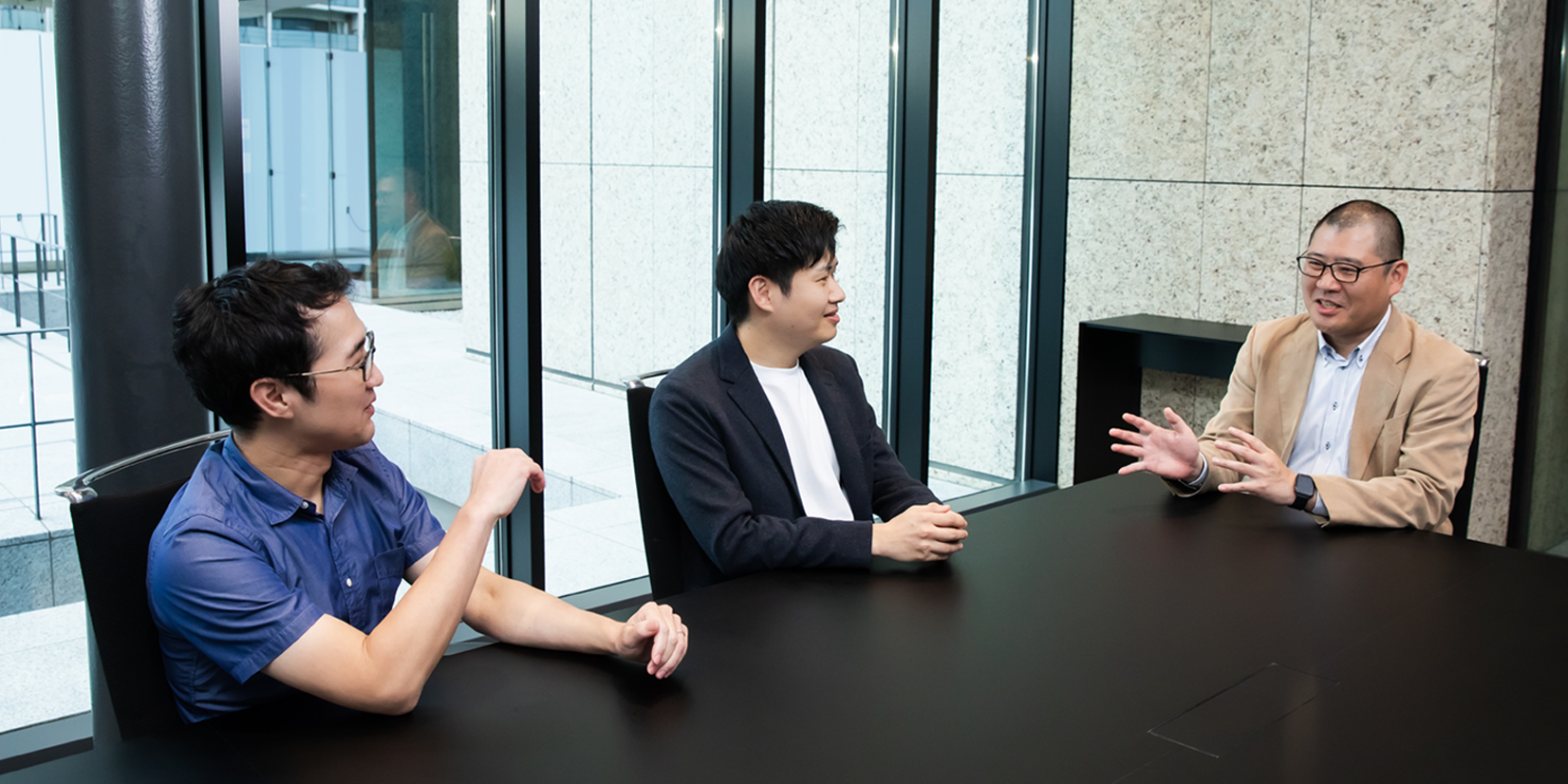
Roadmap: Looking Ahead to FTQC Around 2030
Today's quantum computers tend to accumulate errors caused by noise, making it challenging to execute computations at the scale required for drug discovery on currently existing hardware. The key solution lies in fault-tolerant quantum computers (FTQCs), which feature mechanisms to automatically correct these errors.
"Full-fledged fault-tolerant quantum computers are projected to become a reality around 2030," says Sugisaki.
Arakawa comments: "To translate this technology into patient value as soon as FTQCs emerge, it is crucial to establish computational methods and platforms for drug discovery in advance. We are accumulating validation data and working to identify, develop, and implement the technical components—beyond hardware—that are still missing."
Osawa adds, "I want to use quantum computers in drug discovery to help advance quality-centric drug creation."
Taking on an Uncertain Frontier Together
The journey toward quantum drug discovery has only just begun. In the years leading up to its practical application, we will continue steadily accumulating validation data on simulators, refining algorithms, and building a robust ecosystem.
Yet beyond that steady effort lies a clear goal: to deliver new medicines to patients we have not been able to help until now. Rather than waiting for the technology to mature, we are advancing our research in step with its progress— a proactive stance that defines our approach to quantum drug discovery.
References
Y. Tachi, A. Arakawa, T. Osawa, M. Terabe, K. Sugisaki, “Supramolecular approach-based intermolecular interaction energy calculations using quantum phase estimation algorithm” IEEE International Conference on Quantum Computing and Engineering (QCE), to be published.
URL: https://doi.org/10.48550/arXiv.2512.04587
Kenji Sugisaki (Deloitte Tohmatsu LLC)
With a background in chemistry, he began researching the chemical applications of quantum computers and quantum algorithms for quantum chemical calculations in 2011. After serving as a project-based faculty member at Osaka City University and Keio University, he assumed his current position. His principal publication is Introduction to Quantum Chemical Calculations on Quantum Computers (KS Chemistry Textbook Series, Kodansha). He has authored more than 40 academic papers on quantum computing.
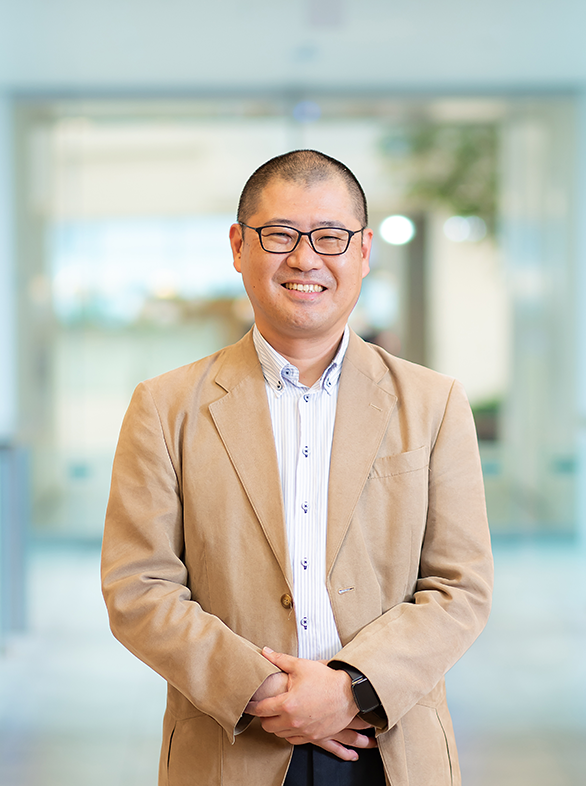
Akihiko Arakawa (Digital Strategy Planning Department)
After earning a Ph.D. in biophysical chemistry, he specialized in computational and in silico drug discovery research. At Chugai, he transitioned from the Discovery Chemistry Department to the Digital Transformation Unit. He drives the exploration and validation of emerging digital technologies, including quantum computing, and works to bridge the gap between pharmaceutical business challenges and emerging technologies.
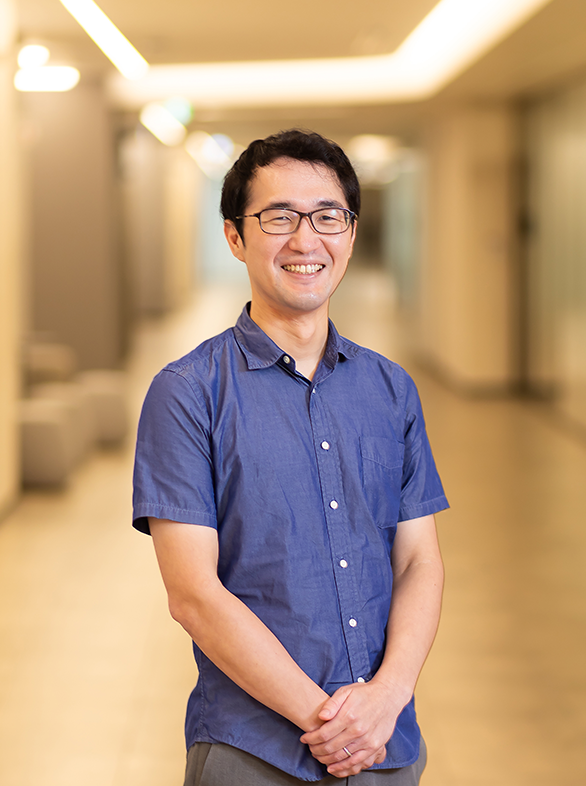
Taisei Osawa (Discovery Chemistry Department)
At the Discovery Chemistry Department, whose mission is to create small- and mid-sized molecule pharmaceuticals, he engages in small-molecule drug discovery research. As an experimental chemist responsible for the design and synthesis of compounds leading to clinical candidates, he also investigates and validates the potential applications of quantum computers in drug discovery from the perspective of a medicinal chemist.
Related Stories
-
How an Original Idea Took Shape: The Journey of the Bispecific Antibody Research That Led to the Lasker Award
Hemophilia is a condition in which the blood does not clot easily, so that once bleeding starts — after an injury or a bruise, for example — it...
- Innovation
- R&D
-
Building Chugai's Bridge to Global Innovation: Inside the US Partnering Office
Chugai’s U.S. Partnering Office in South San Francisco is expanding the way Chugai Pharmaceutical engages with breakthrough science in the United...
- Innovation
- R&D
- Partnering
-
Chugai Pharmaceutical × Roche Diagnostics toward deeper Co‑Creation beyond corporate boundaries— Uniting Pharmaceuticals and Diagnostics
Chugai Pharmaceutical Co., Ltd. and Roche Diagnostics K.K. (hereinafter “RDKK”)—two companies active in different fields, pharmaceuticals...
- DX
- Event