
Building Chugai's Bridge to Global Innovation: Inside the US Partnering Office
- Innovation
- R&D
- Partnering
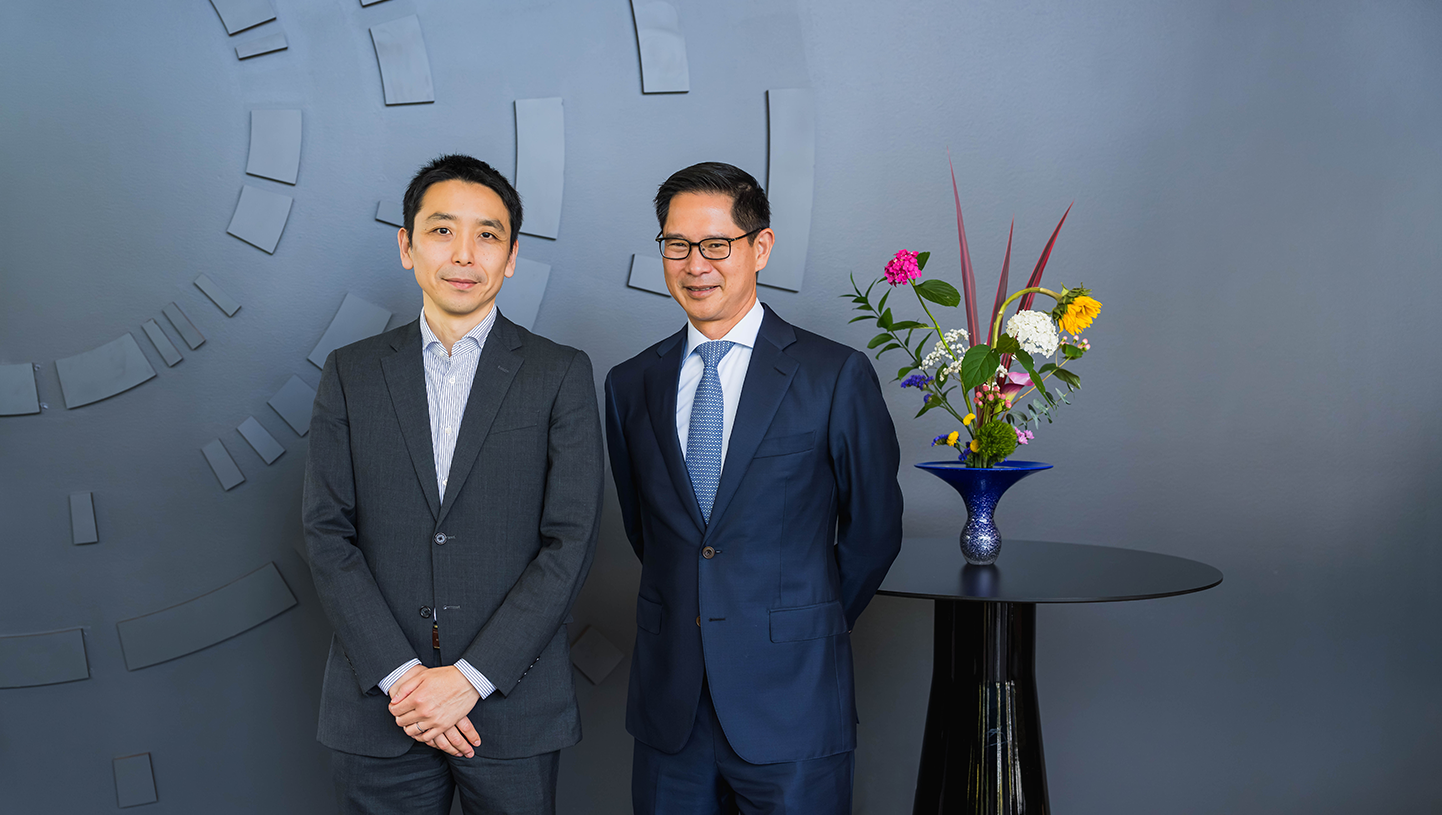


Chugai’s U.S. Partnering Office in South San Francisco is expanding the way Chugai Pharmaceutical engages with breakthrough science in the United States as part of its global partnering network. Led by Andrew Wong, Head of Chugai Partnering, U.S., the team works closely with Chugai’s global partnering teams worldwide to connect with biotech startups, academic researchers, and venture investors. In this article, Andrew Wong and Yutaka Matsuda, Global Head of Search & Evaluation in Tokyo, share their perspectives.
A Fresh Start in the Heart of Biotech
Six months after its launch, Chugai’s U.S. Partnering Office is already establishing a strong presence in the Bay Area life sciences ecosystem.
"Our mission is to identify and build partnerships with the most innovative academic researchers, biotechnology companies, and venture investors in the U.S.," says Andrew Wong, who leads Chugai Partnering in the U.S. He adds, "Through these partnerships, we aim to complement Chugai's core technology platforms in antibodies, the macrocyclic peptide platform SnipeTide™, and small molecules."
On a typical day, Wong and his team are actively engaged across the ecosystem—meeting scientists, attending conferences, visiting labs, and connecting with startup founders and venture capitalists. When they identify compelling opportunities, they work closely with R&D and the partnering team in Japan to evaluate them, structure partnerships, and create value for both sides.
"We seek technologies that can create synergy with Chugai's strengths," Matsuda explains. "We also search for assets that align with Chugai's disease area strategy. We oversee the Chugai Group's search and evaluation activities as a whole."
Strength Through Collaboration: Chugai Within the Roche Group
As a member of the Roche Group, Chugai operates with its own R&D and partnering strategy.
"What makes our model unique is that we have the best of both worlds," Wong explains. "For partners, this means working with a team that combines strong discovery and development capabilities across the value chain, with the potential to connect promising science to global opportunities through the Roche Group."
The proof is in the track record: a bispecific antibody for hemophilia, discovered and developed by Chugai and later commercialized globally through the Roche Group. It is a model the team believes can be replicated with external partners—one in which Chugai's scientific innovations contribute to improving patients’ lives worldwide.
Why Chugai? Two Paths to the Same Mission
Andrew Wong’s career has spanned biotech, large pharma, and venture capital. What drew him to Chugai, he says, was the company’s combination of world-class science, a strong focus on open innovation, and its ambition to strengthen Chugai’s global partnering activities through a presence in the U.S. “This direction was closely aligned with my experience, and I felt I could contribute immediately.”
He points to Chugai’s highly regarded antibody engineering and small molecule platforms, its differentiated macrocyclic peptide platform, and a highly collaborative team dedicated to strengthening Chugai’s partnering activities in the U.S. as part of its global network.
Matsuda's path was quite different—but it ultimately led to the same place. After more than a decade in Chugai's research division, where he led anti-cancer drug projects, including a stint at Genentech, he felt the need to view the company's research activities from a different perspective. In 2021, he moved to headquarters and led the group that established the Chugai Venture Fund. "This marked the beginning of my career looking outside the company," he says. "My career in business development is a natural consequence of that experience."
Through close collaboration across geographies and cultures, Wong and Matsuda have sharpened their approach to partnering. "We try to be very honest with each other on projects," they say. "That allows us to tackle challenges productively and efficiently."
This openness reflects a broader culture at Chugai that Wong appreciates. "It’s very collaborative and very team-oriented across departments," Wong says. "And I think that is important for long-term success."
What the U.S. Ecosystem Is Watching Now
Wong closely tracks the trends shaping drug discovery in the United States. Beyond Chugai’s core strengths in antibody technologies, including bispecific antibodies and multispecific T cell engagers, he sees intense activity in protein degradation, RNA therapeutics, and gene editing.
The biggest conversation, inevitably, is AI.
"There is tremendous focus, discussion, and research around AI drug discovery and the use of AI throughout the drug development process," Wong says. "Outside the life sciences sector, a number of major AI IPOs are being announced. Inevitably, this momentum will increasingly carry over into the life sciences space."
Launching Into the Ecosystem
In June, the U.S. Partnering Office held an opening ceremony in the Bay Area to celebrate its launch, bringing together participants from biotech, academia, venture capital, and Chugai leadership. The event highlighted Chugai’s partnering vision and its commitment to breakthrough innovation.
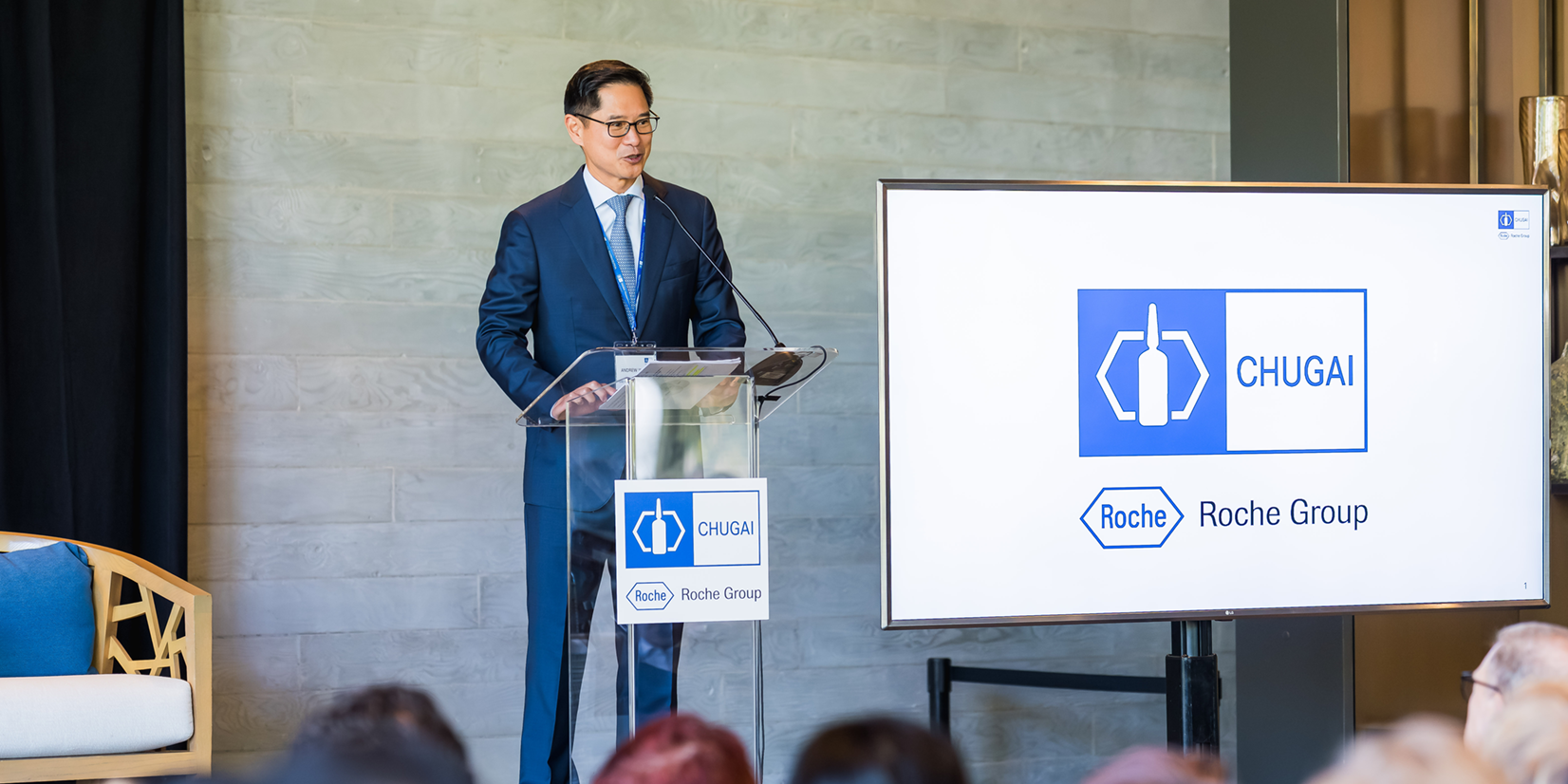
In May 2026, Chugai also joined the Industry Affiliate Program at Bakar Bio Labs, UC Berkeley's flagship incubator for biotech startups. Bakar Bio Labs supports early-stage life science ventures by providing lab space and access to a broad innovation community in the Bay Area. As an Industry Affiliate, Chugai engages closely with resident startup teams and contributes to scientific and ecosystem development initiatives.
"The Bay Area represents one of the most dynamic life sciences ecosystems in the world, and this affiliation provides us with direct access to the bold science being pursued by innovative academic researchers and its emerging companies," Wong says. He adds, "We look forward to the exchanges and discoveries this relationship will enable."
A Message to Future Partners
For those considering partnering with Chugai, Wong offers a simple invitation: “We are interested in engaging early with groups doing exceptional science. We aim to be highly collaborative—combining scientific depth with the ability to work closely together to advance ideas into meaningful solutions for patients.”
Matsuda adds a perspective shaped by years on the research side and offers a candid view of Chugai's partnering philosophy. "Our style is unique compared with that of other large pharmaceutical companies. Our research division has a strong voice because we focus on creating synergy with its activities. Our goal is not simply to speed up the contracting process, but to pursue high-quality scientific outcomes with our partners," he says. "As long as both sides are satisfied and ultimately deliver meaningful value to patients, that is perhaps the most important goal."
It is a message that balances ambition and honesty—and signals that for Chugai, partnership is not a transaction. It is a commitment to building something transformative together.
Related Stories
-
How an Original Idea Took Shape: The Journey of the Bispecific Antibody Research That Led to the Lasker Award
Hemophilia is a condition in which the blood does not clot easily, so that once bleeding starts — after an injury or a bruise, for example — it...
- Innovation
- R&D
-
Breaking Through Drug Discovery's Computational Challenge: Chugai's Path Toward Practical Quantum Computing
Drug discovery is a complicated process of identifying the most promising clinical candidates from an enormous number of molecular combinations. Improving...
- Innovation
- R&D
- DX
-
Transforming Bioprocesses Through the Use of AI: A Challenge Driven by Collaboration Between Data Scientists and Bioprocess Researchers
Bioprocessing is a method of producing active pharmaceutical ingredients for biopharmaceuticals using living cells and microorganisms, and it plays a...
- Innovation
- R&D
- DX