
Transforming Bioprocesses Through the Use of AI: A Challenge Driven by Collaboration Between Data Scientists and Bioprocess Researchers
- Innovation
- R&D
- DX


Bioprocessing is a method of producing active pharmaceutical ingredients for biopharmaceuticals using living cells and microorganisms, and it plays a critically important role in pharmaceutical manufacturing. By leveraging AI, Chugai is taking on the challenge of dramatically improving the efficiency of bioprocess research, with the aim of delivering innovative, high-quality medicines to patients more quickly.
In this feature, we spoke with two scientists with different areas of expertise who are developing AI models to transform downstream process development for antibody medicines. They share their perspectives on the potential of AI, their vision for the future, and the colleagues with whom they are taking on this challenge.
*Reproduced from Chugai Pharmaceutical’s official Note page (https://note.chugai-pharm.co.jp/). Article details and employee positions are current as of April 2025.
Interviewees
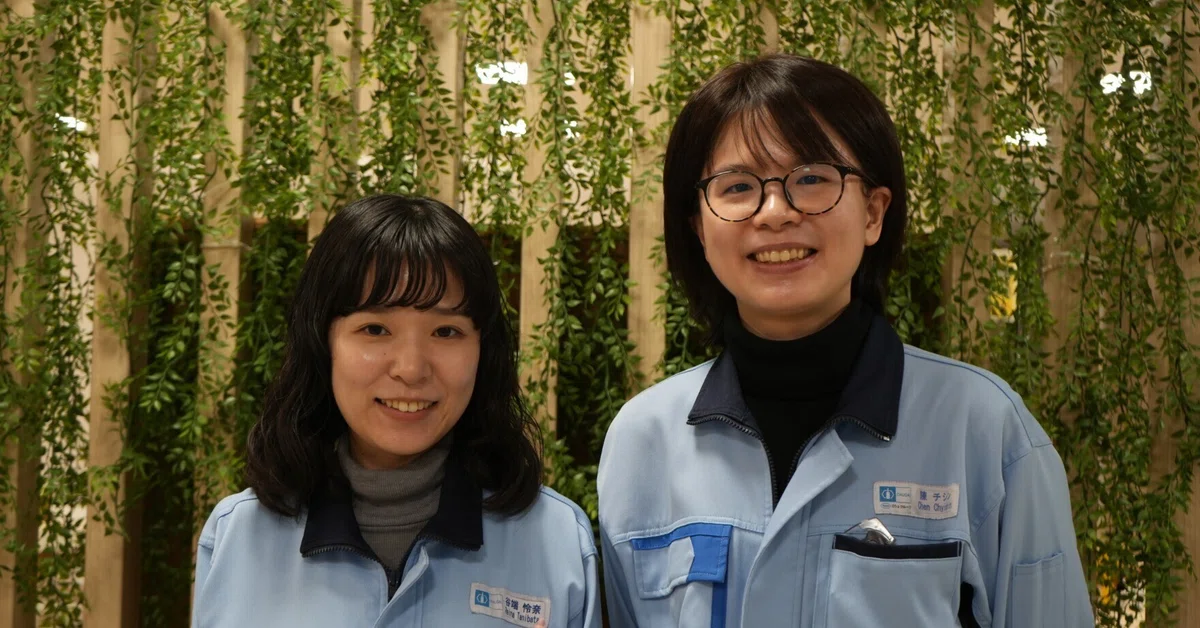
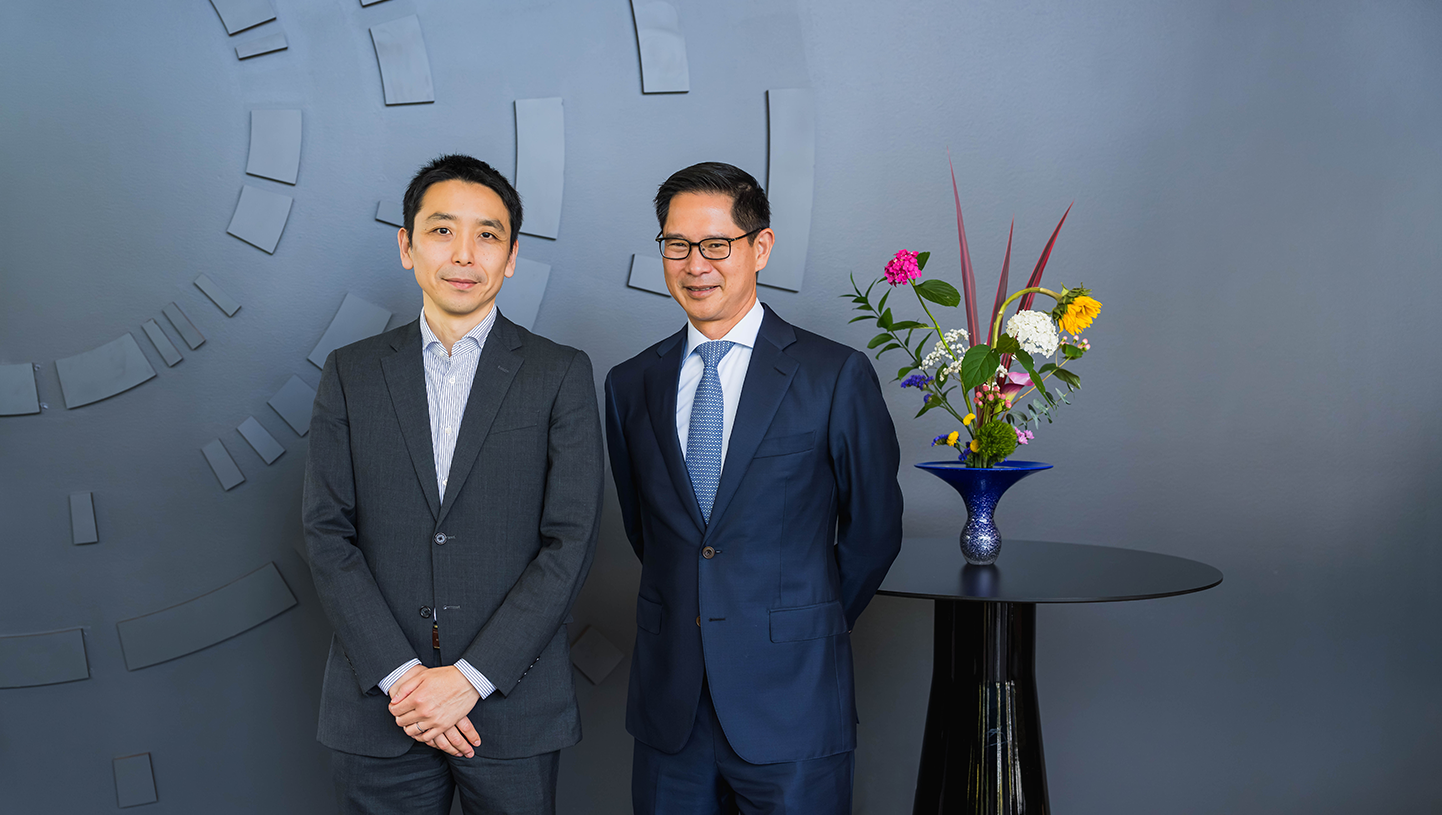
Chyishin Chen (right in the top image): Pharmaceutical Technology Division, API Process Development Department, Purification Technology Development Group
Reina Tanibata (left in the top image): Pharmaceutical Technology Division, API Process Development Department, Purification Process Development Group
(Affiliations are as of the time of the interview.)
Two scientists with different areas of expertise
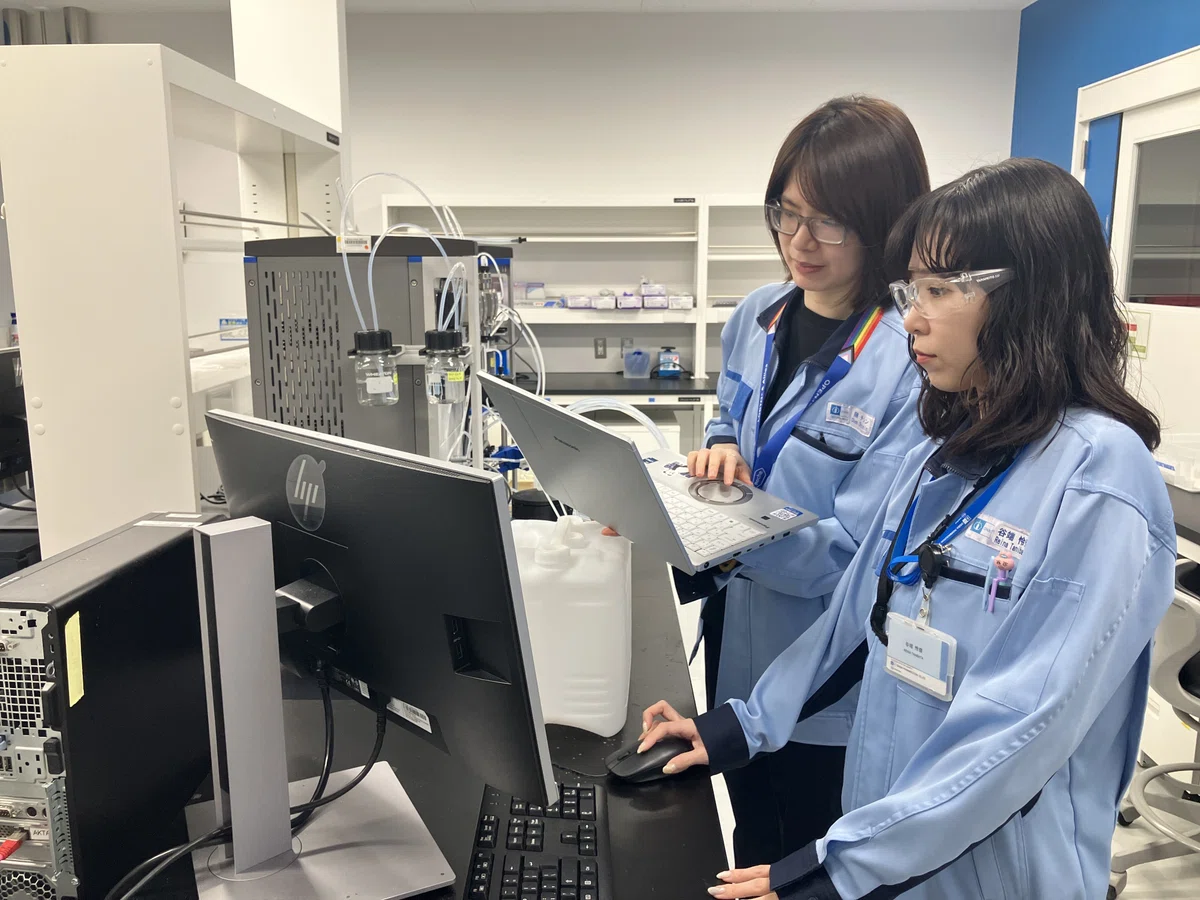
Tanibata As a researcher specializing in antibody purification, I am responsible for designing purification processes and conducting scale-up studies for new antibody medicines. To manufacture drug candidates as active pharmaceutical ingredients, I develop processes to efficiently purify antibodies that serve as the active components. Recently, I have also been involved in validation studies for late-stage development products in preparation for regulatory submissions.
Chen As a data scientist, I develop modeling technologies to improve the efficiency of process design and accelerate development in antibody manufacturing. Leveraging my background in bioprocess development and data science, I work on developing predictive technologies for quality attributes and process conditions. In addition, I am involved in building databases related to antibody purification, as well as developing applications for data analysis and data visualization.
The Potential of AI Utilization in Bioprocess Development
Tanibata In conventional bioprocess development, process conditions are determined through experimental trial and error for each step, including cell culture, cell separation, purification and concentration of antibodies, which serve as the active ingredients. This process can take two to three months or longer for a single purification step, and preparing experimental samples requires significant amount of time and cost.
If AI can be used to predict optimal manufacturing methods, it has the potential to significantly reduce the time and resources required for experiments needed to design manufacturing processes for new antibody medicines.
For example, in a case where AI was applied to the UF/DF (ultrafiltration/diafiltration) step—an essential process for concentrating active ingredients※—we observed a substantial improvement in the speed of process development. We achieved a reduction in the number of experiments, leading to greater efficiency, shortening the development period by approximately 30% and reducing researchers’ workload.
As a result, purification processes for new antibody medicines can be designed more quickly and efficiently, enabling the parallel development of multiple antibody drugs. This ultimately improves overall pipeline productivity and shortens development timelines.
※)https://doi.org/10.1002/biot.202400212
Chen CS, Ujiie S, Tanibata R, Kawase T, Kobayashi S. Explainable Machine Learning Models to Predict Gibbs–Donnan Effect During Ultrafiltration and Diafiltration of High-Concentration Monoclonal Antibody Formulations. Biotechnol J. 2024 Oct 9;e2400212. doi:10.1002/biot.202400212.
Chen From the perspective of a data scientist, I believe there are three key areas where AI can be applied to bioprocessing.
The first is quality prediction. The UF/DF process example mentioned by Ms. Tanibata falls into this category. By using AI models to predict quality attributes, it becomes possible to reduce the number of wet experiments required.
The second is process condition prediction. AI models can predict optimal purification conditions—such as which purification parameters to use and what buffer pH levels best separate impurities—without relying solely on experimental approaches. This makes it possible to identify optimal conditions that may not be discovered through conventional experimentation and to further shorten development timelines. The third is real-time monitoring and control. In the future, by combining data collected through Process Analytical Technology (PAT) with predictive models, it will become possible to perform real-time product quality prediction and process control. If real-time data can be analyzed and acted upon immediately, process sophistication will advance significantly, enabling more precise quality control. For example, early detection of abnormal quality trends could help prevent the generation of defective products and improve production efficiency. Technologies that use such model- and simulation-based approaches to recreate the real world in a virtual space are referred to as Digital Twin. We expect these technologies to become increasingly practical over the next few years, and they hold the potential to fundamentally transform bioprocessing.
Key to AI Utilization: Model Reliability and the Integration of Diverse Expertise
Chen When developing models with later-stage development in mind, explainable AI and trustworthy AI are essential.
Explainable AI refers to AI that can explain how it arrives at its results in a way that is understandable even to non-AI specialists. Trustworthy AI, on the other hand, goes beyond explainability to ensure the overall reliability of the model, including the logical consistency of its predictions and the absence of bias.
In our published research, we used a method called SHAP (Shapley Additive exPlanations) to quantitatively evaluate the contribution of individual data features and visualize their impact on prediction results, making the AI’s decision-making process easier to understand.
Tanibata In process development, the reliability of the data obtained is critically important whenever new methods are introduced, not just when applying models. In this project, the data scientist demonstrated that the model met the requirements of trustworthy AI, and reliability was confirmed by applying it to actual experiments and obtaining results that matched our expectations.
Chen In addition to model reliability, communication among team members with different areas of expertise is crucial when applying AI to projects. By working closely with bioprocess researchers who possess deep expertise in antibody separation and purification principles, we can accurately identify process and prediction requirements. This not only allows us to maximize the value of the models but also enables us to interpret phenomena that affect drug quality based on the prediction results and generate new insights. Integrating diverse areas of expertise in this way, AI can serve not only as a prediction tool but also as a partner in scientific discovery.
Tanibata In the case of applying AI models to business operations, when people hear that purification conditions established through experimentation may be replaced by AI models, some understandably feel resistance. Rather than simply explaining model accuracy, we gained trust by presenting concrete examples—such as comparisons between model predictions and actual experimental data from past samples.
Even though our areas of expertise and daily work differ, we are united by a shared goal: to innovate bioprocessing and deliver innovative, high-quality medicines created by Chugai to patients as quickly as possible. I believe this shared sense of purpose deepens mutual understanding and fosters open communication.
Challenges and Outlook for Practical Application
Tanibata The next challenge is developing models that will be accepted by regulatory authorities during approval applications for commercialization. At Chugai, we have not yet submitted applications using process validation data generated with AI models, so this will be our next major challenge.
Chen Another challenge is collecting sufficient data to build more accurate models. In the case presented in our paper, the amount of existing data was limited, so we devised our data preprocessing methods carefully when building the model. As new antibody purification processes are developed, we plan to combine existing data with newly collected data and continuously update the model. By doing so, we aim to steadily improve prediction accuracy and expand the range of applications the model can support.
A Message to Future Teammates
Chen We are looking for teammates who want to take on the challenge of innovating bioprocessing together with us. We welcome not only those who have expertise in both data science and process development, but also those who specialize in either one. Our department offers opportunities for scientists engaged in bioprocessing to learn data science skills through internal training programs.
For those who enjoy new challenges and are eager to actively learn knowledge from different fields and apply it to real work to create value, this is an ideal environment.
Tanibata Not everyone who joins us has extensive experience in bioprocessing from the beginning. Even those without prior purification experience can acquire a high level of expertise through hands-on work. As Chen mentioned, curiosity and flexibility—being able to enjoy and embrace new things—are essential. I would like to work with people who are not bound by past conventions and who view change positively and with enthusiasm.
Chen Chugai has a corporate culture that values employee growth and challenge. In addition, state-of-the-art experimental environments—both wet and dry—are in place, providing a foundation where researchers can fully demonstrate their abilities. We sincerely welcome those who would like to join us in taking on the challenge of shaping the future of medicine.
Related Stories
-
How an Original Idea Took Shape: The Journey of the Bispecific Antibody Research That Led to the Lasker Award
Hemophilia is a condition in which the blood does not clot easily, so that once bleeding starts — after an injury or a bruise, for example — it...
- Innovation
- R&D
-
Breaking Through Drug Discovery's Computational Challenge: Chugai's Path Toward Practical Quantum Computing
Drug discovery is a complicated process of identifying the most promising clinical candidates from an enormous number of molecular combinations. Improving...
- Innovation
- R&D
- DX
-
Building Chugai's Bridge to Global Innovation: Inside the US Partnering Office
Chugai’s U.S. Partnering Office in South San Francisco is expanding the way Chugai Pharmaceutical engages with breakthrough science in the United...
- Innovation
- R&D
- Partnering