
Engraving the Memory of Life Science: Monuments at Chugai Life Science Park Yokohama Earn Global Design Honors
- Innovation
- R&D
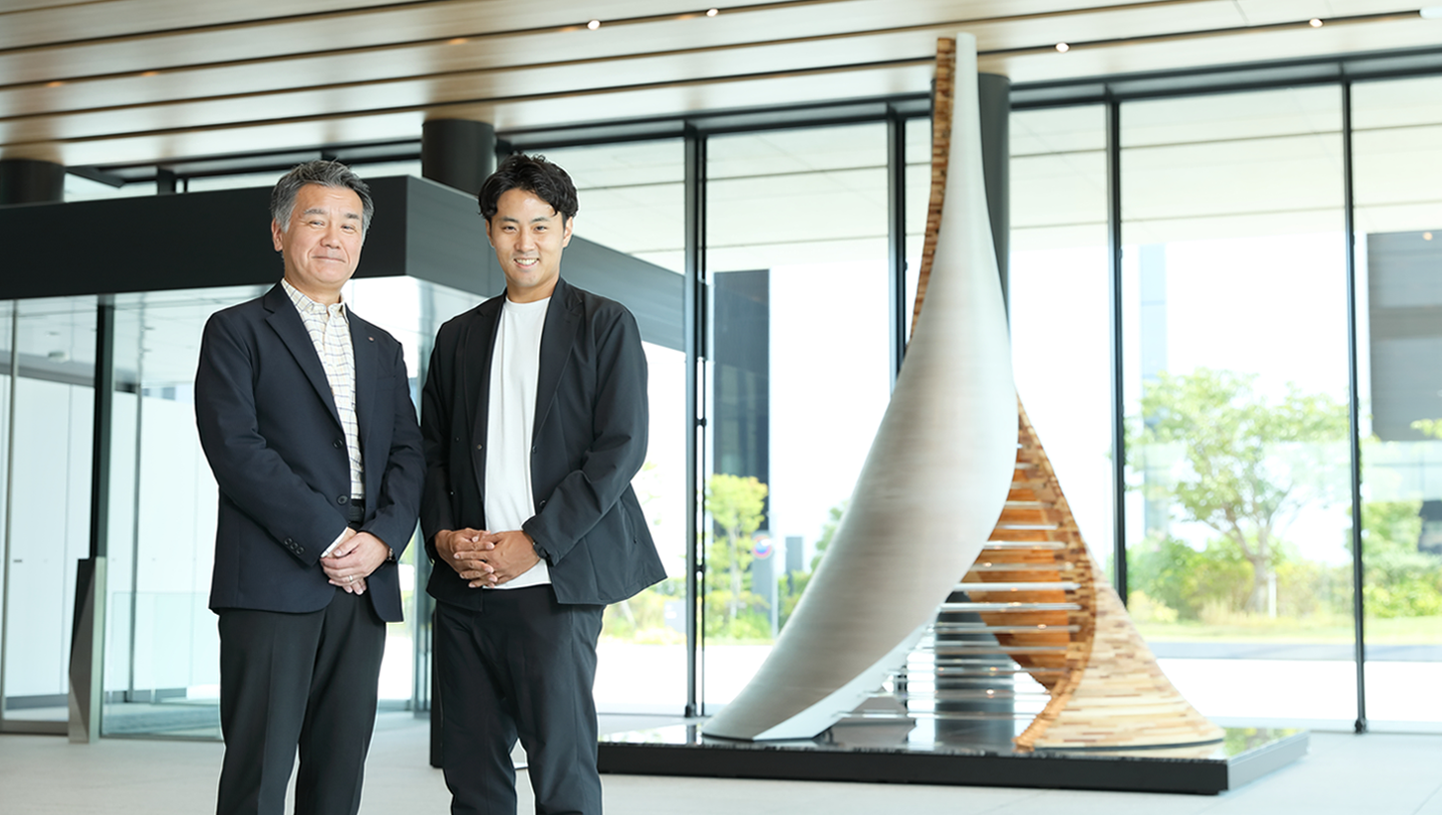


Nestled in the lush greenery of Totsuka, Yokohama, Chugai Pharmaceutical’s Research Laboratory, Chugai Life Science Park Yokohama, now welcomes visitors with two striking monuments, Life Science Code and Life Science Summit, which have won numerous international design awards. We spoke with Takumi Takahashi of Hakuten Corporation, who directed and designed these monuments, and Koma Oki, General Manager of the Research Support Department at Chugai, who oversees the research center's facilities and environment. They shared the story behind why these monuments, seemingly unrelated to science or drug discovery, were erected at a state-of-the-art research laboratory and the vision embedded within them.
Global Recognition for Two Signature Works
Life Science Code has received numerous design awards, recognized for its expression of the essence and potential of life science. These include the Platinum Award (the highest honor) at the prestigious A' Design Award & Competition, an iF DESIGN AWARD, being shortlisted for the Japan Kukan Design Award, and a Silver in the International Design Awards (IDA). Life Science Summit was also shortlisted for the Japan Kukan Design Award and won a Bronze in the IDA.
"I'm delighted that the mysterious allure and vast potential of life science—a field whose frontiers remain largely unexplored—have reached many people and earned broad international recognition, " says designer Takumi Takahashi, expressing his joy over the awards.
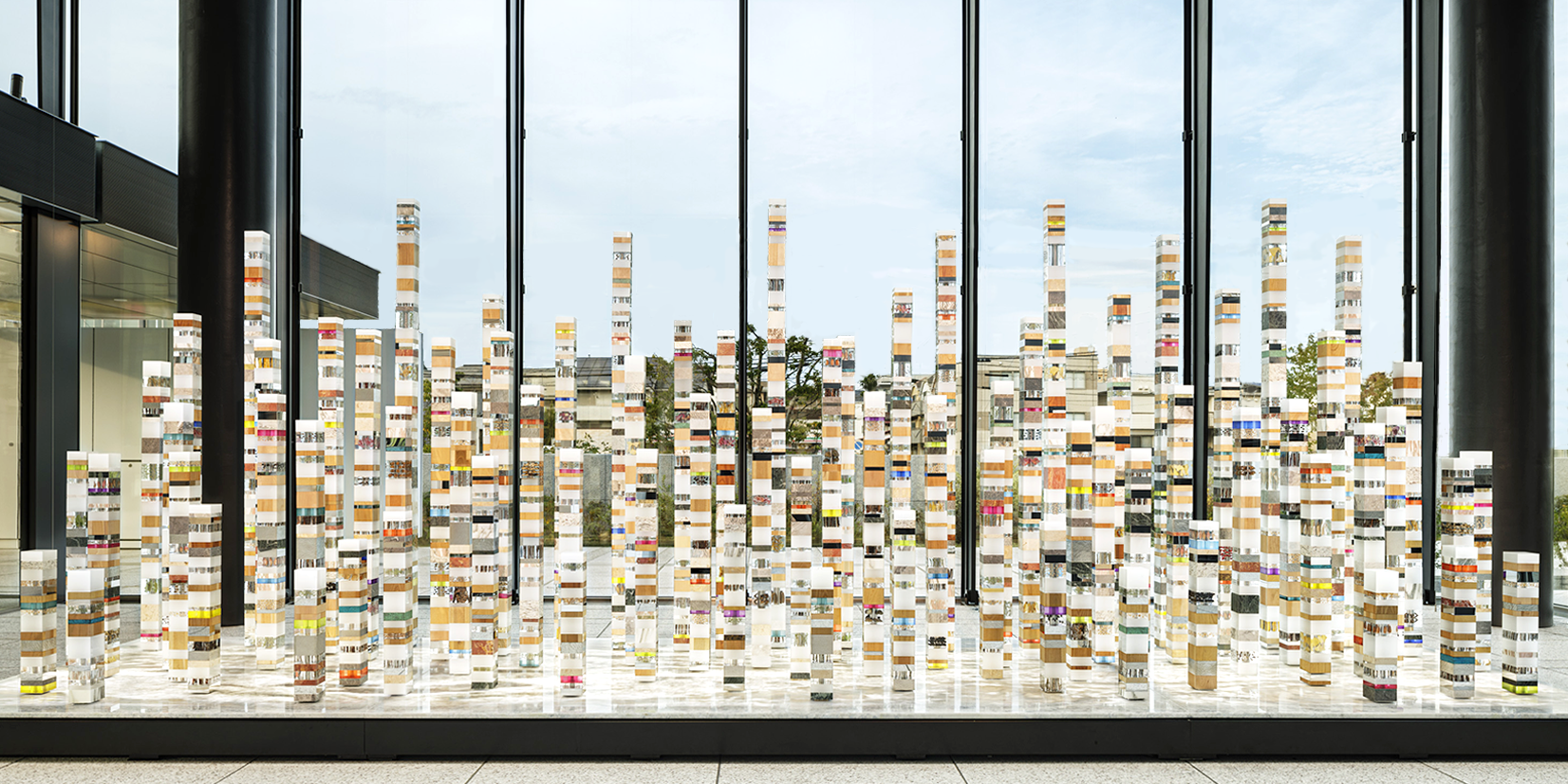
The two monuments were created as symbols for Chugai Life Science Park Yokohama (Chugai LSP Yokohama), which began full-scale operations in April 2023.
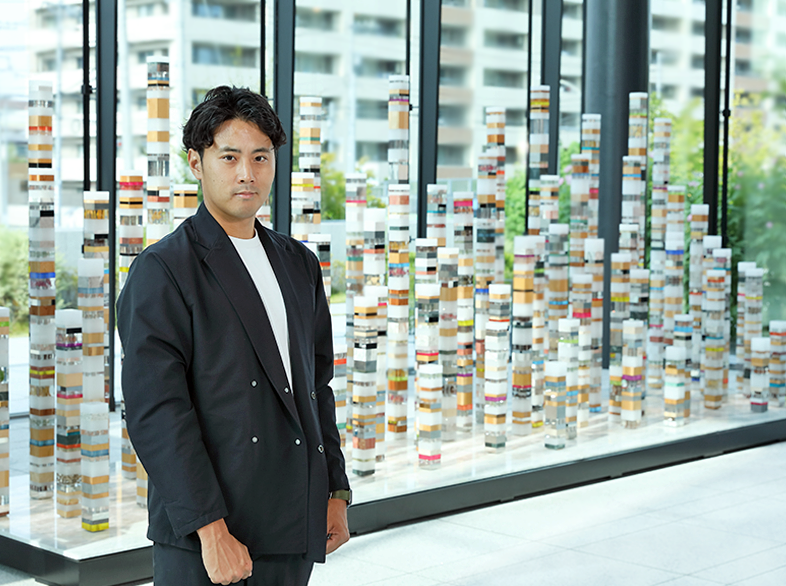
"I learned that Chugai focuses on personalized healthcare based on DNA information. As I studied DNA, I came across images of DNA analysis. I found them beautiful, almost like a cityscape of skyscrapers. I intuitively felt I wanted to create a monument based on this motif," Takahashi recalls, describing the moment he found inspiration for Life Science Code.
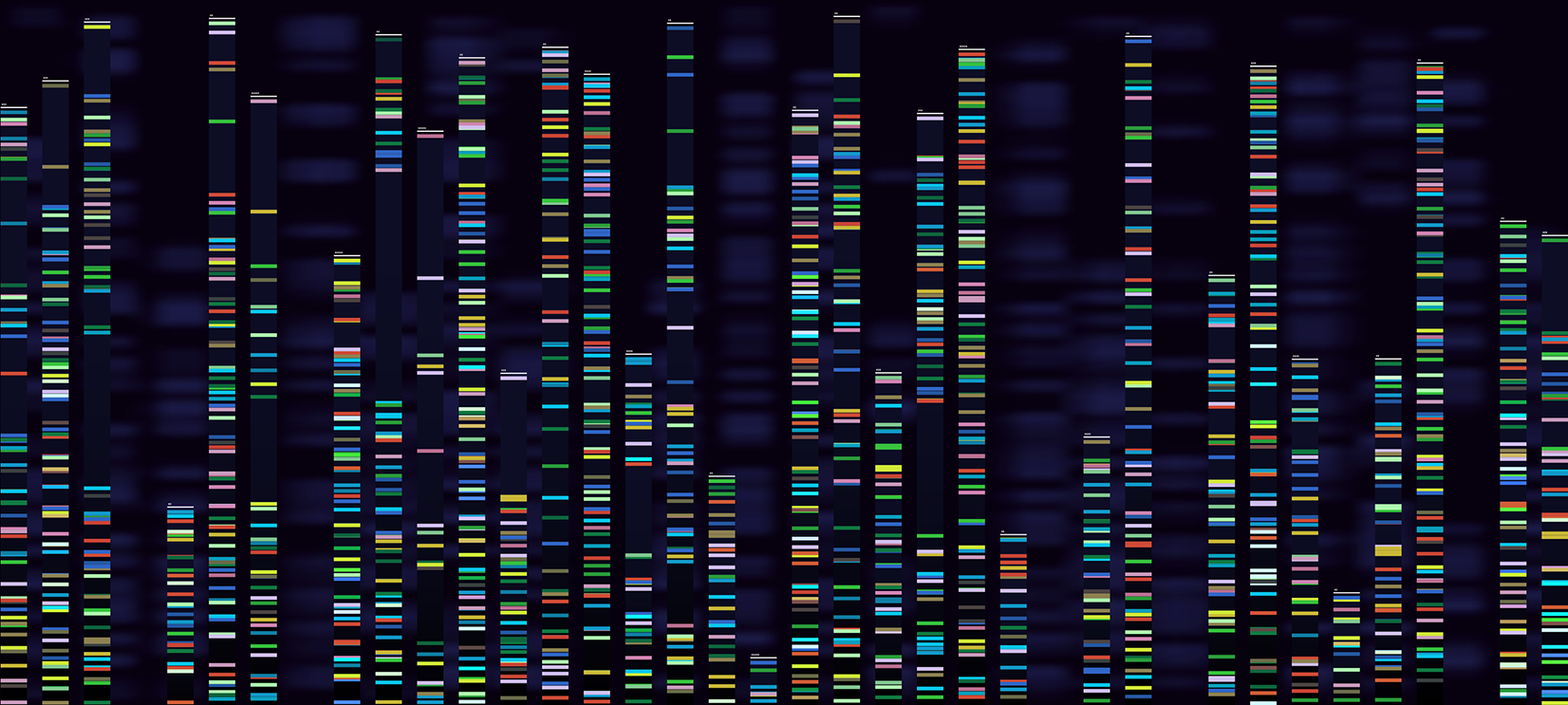
Captivated by the beauty of DNA, Takahashi continues, "Since the first life appeared on Earth, DNA has evolved while engraving the 'memory' of humanity, passing it down to the present day. I wanted to express that 'memory' and the mystique of DNA in this work."
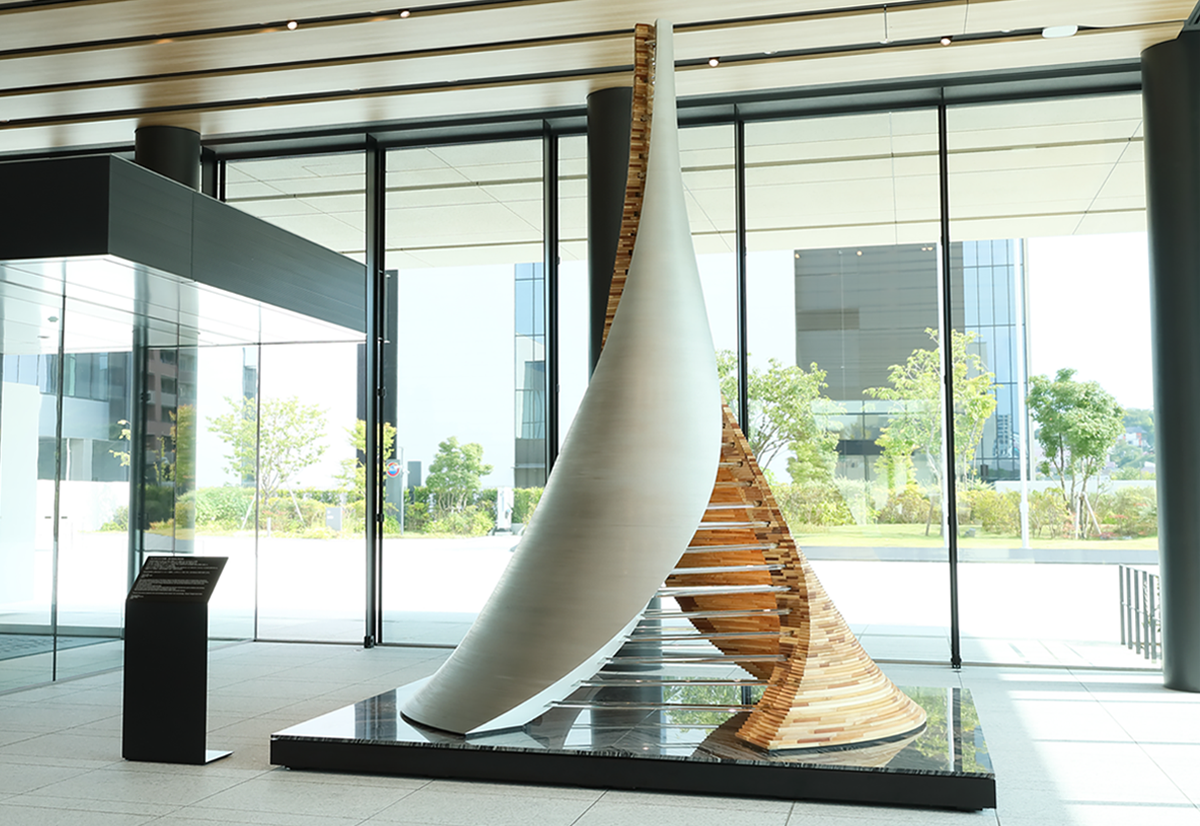
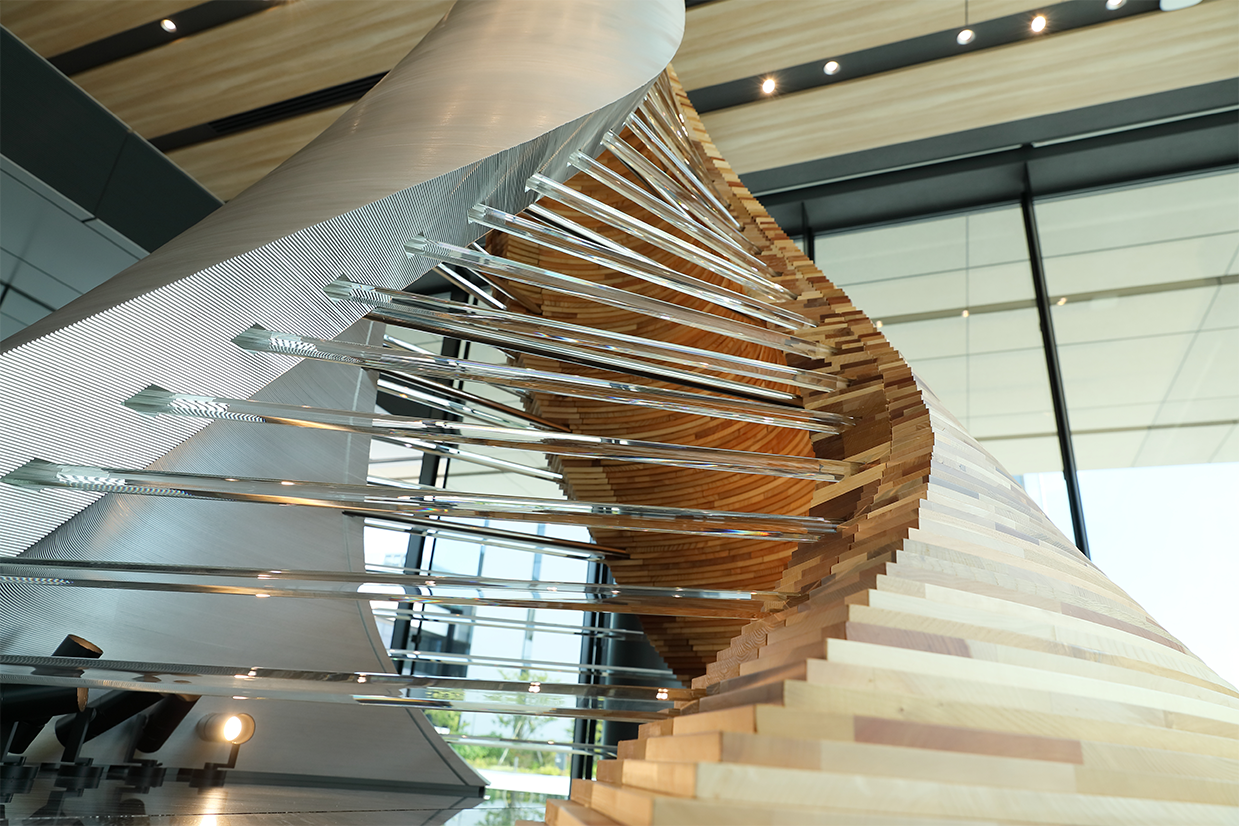
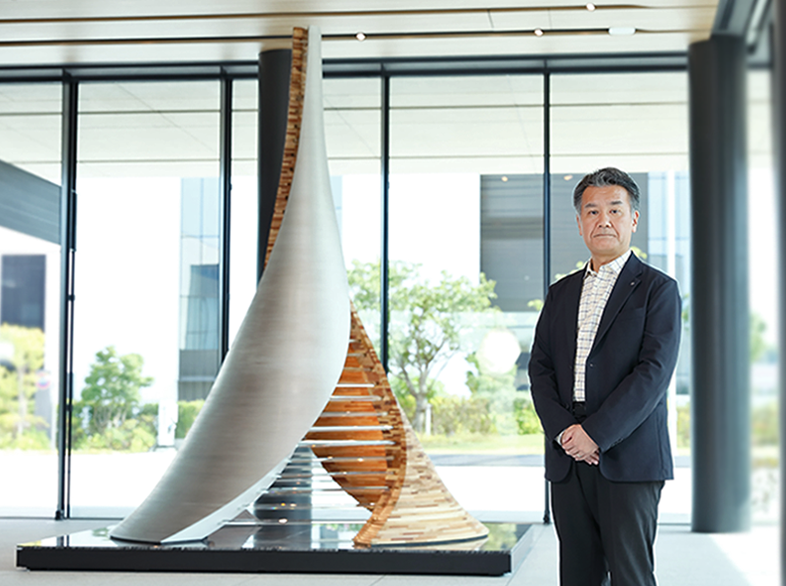
Life Science Summit is based on the double helix structure of DNA and is constructed from laminated wood from native Japanese trees and a stack of 1,230 aluminum plates. The concept was praised for its use of natural materials and technology to create the "summit" of life science.
The Creative Process: Turning Vision into Reality
Oki oversaw and promoted the project leading up to the Chugai LSP Yokohama operation.
"We wanted to install a monument that would express our resolve and determination to confront the depths of life science and create innovative new drugs," says Oki, explaining the motivation behind the project.
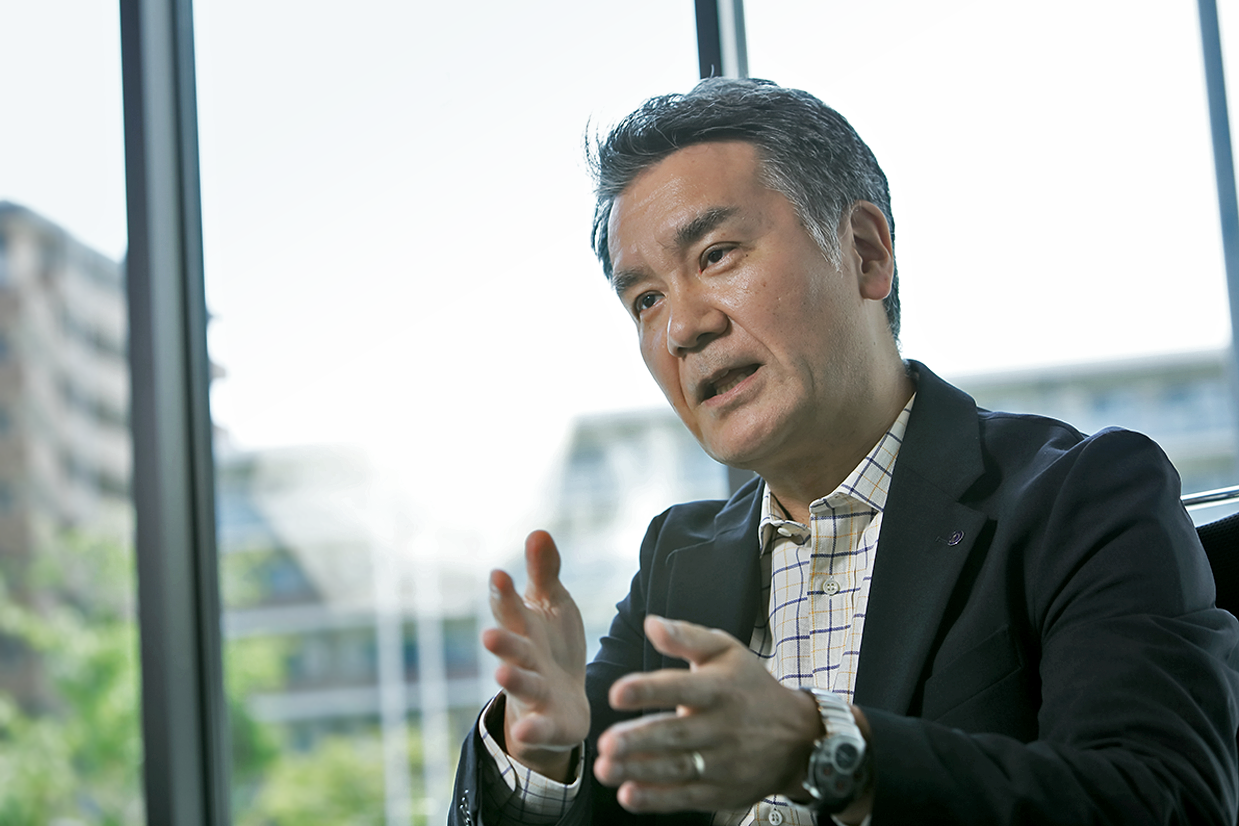
"Our management team at the time was actively involved in the creation of the monuments," Oki recalls. "We had numerous discussions on how to express Chugai's commitment to 'aiming for the summit of life science.'"
"As its name suggests, Life Science Summit symbolizes the pursuit of this summit. Its upward-reaching form represents our very determination to continuously challenge. It embodies Chugai's dedication to reaching the top through vast and diligent research, driven by a sincere desire to contribute to the health and happiness of patients," Oki explains.
Furthermore, the management team was insistent on expressing both our history and our vision for the future. "Chugai LSP Yokohama was created by consolidating our research laboratories in Fuji Gotemba and Kamakura. Chugai is what it is today because of the cumulative efforts and hard work of our predecessors at those two sites. We wanted to embed our gratitude for these two research laboratories and our determination to 'continue creating innovative medicines' into a single work of art," Oki continues.
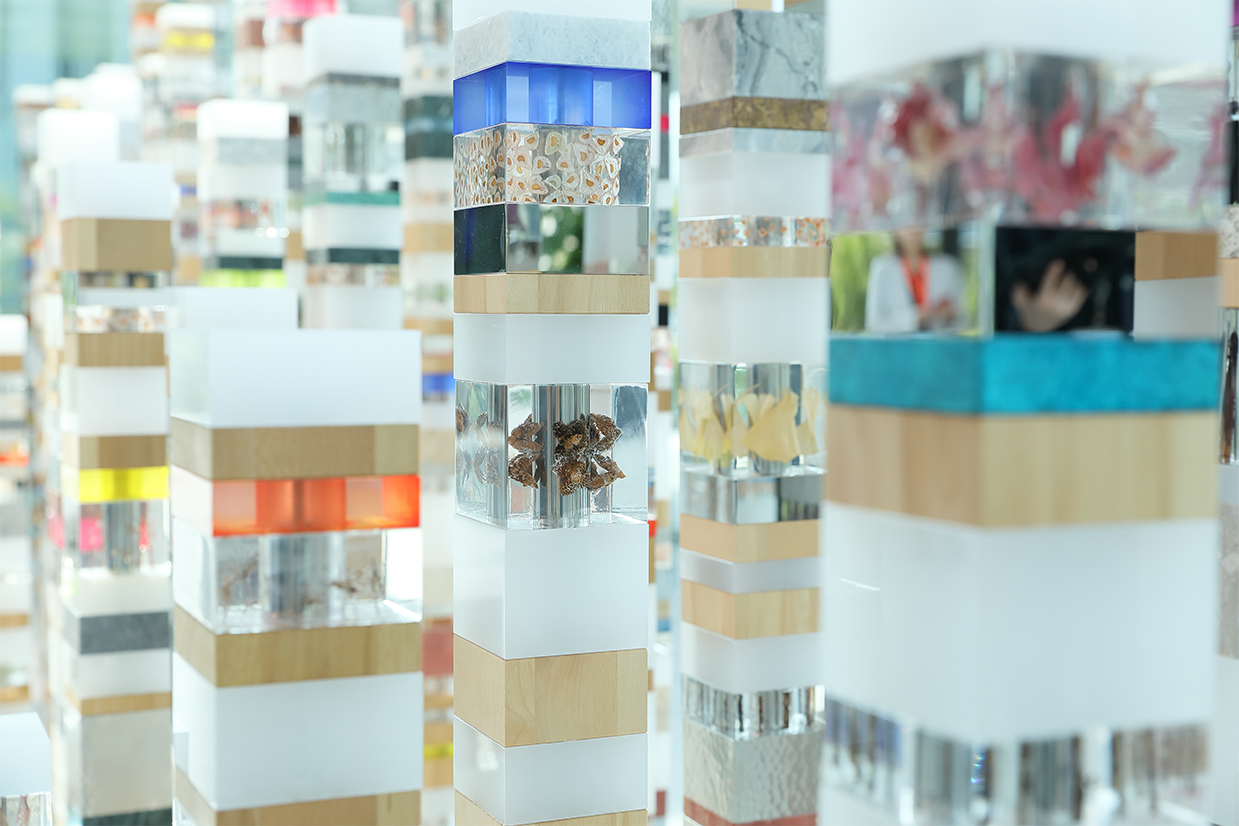
In Life Science Code, "memory" is engraved through a variety of materials. Materials gathered from forests represent the memory of nature; rocks formed over eons represent the memory of the earth; and traditional crafts and artisanal skills like gold leaf and hammered metalwork represent the memory of humanity. Finally, plants collected from the Fuji Gotemba and Kamakura research laboratories represent Chugai's own memory.
"We had many discussions with Mr. Takahashi and the Hakuten project team about the kind of research Chugai does and the aspirations we have for Chugai LSP Yokohama. They wonderfully brought our vision to life," says Oki, reflecting on the production process.
Takahashi adds, "Unlike my past projects, the key here was the co-creation with everyone at Chugai. I was constantly thinking about how to give form to their thoughts and opinions."
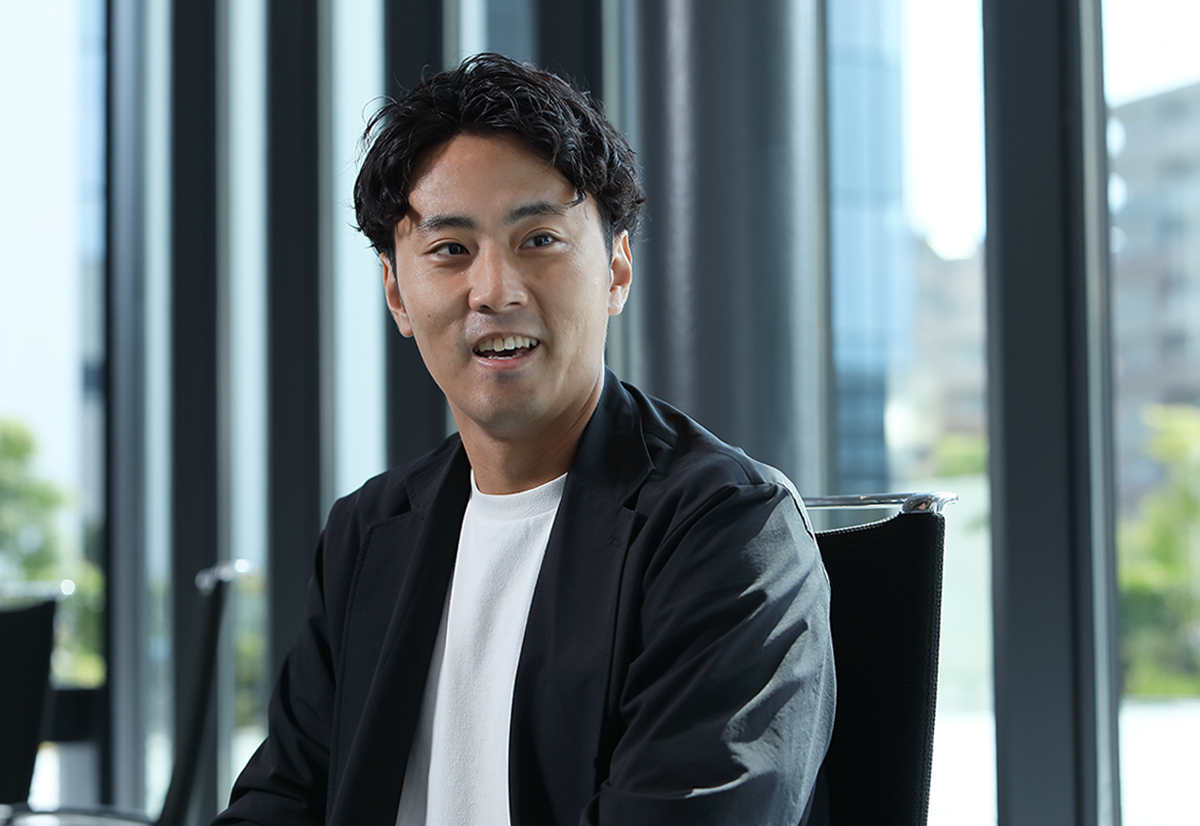
"The process had its challenges, but more than that, there was a great sense of anticipation that we were creating a landscape unlike any other," Takahashi recalls. The monument project, which began in February 2022, was completed after about one year and three months.
A Hub for Innovation: Delivering New Drugs to the World
The new research laboratory project was started in 2014, based on the concept of creating a hub for continuous innovation and further strengthening Chugai’s drug discovery capabilities. After nine years, Chugai LSP Yokohama began full-scale operations in 2023.
"This was not just a simple relocation and consolidation of research laboratory. It was driven by the strong conviction of Honorary Chairman, Osamu Nagayama, that 'to create innovative drugs that contribute to patients worldwide, we need an environment where researchers can perform at their best.' That conviction is reflected in every corner of this research center," says Oki.
The development of a new drug typically takes a long time, from 9 to 17 years. Moreover, only a tiny fraction of the vast amount of research leads to a product that makes it to market. The probability of success is said to be as low as one in 30,000, making it an arduous journey of repeated trial and error for researchers.
"Our research is a constant encounter with the unknown," Oki states. "Behind every single success, there are countless failures. However, each of those experiences leads to the next success. We don't see failure as a bad thing; instead, we face the next research project or experiment head-on. That is our culture."
Takahashi shares his hope: "I want the monuments to be something that gives employees an opportunity to return to their starting point when they hit a wall in their research."Oki adds his expectations, "I also hope they become a place that sparks inspiration and innovation for our researchers."
A Symbol of Unwavering Commitment to the Future
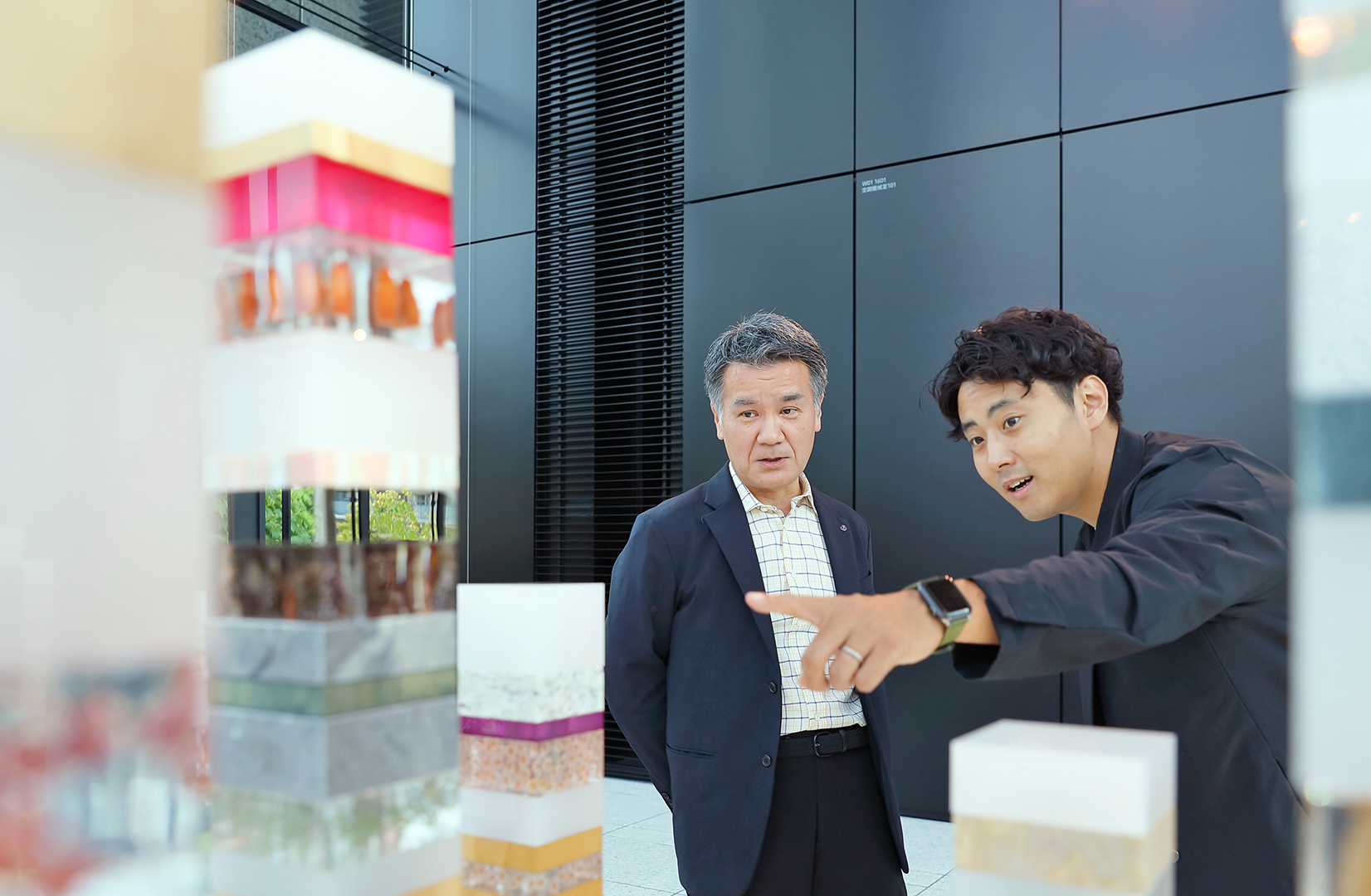
"I believe the power of these monuments lies in their ability to express the sense of mission, passion, and dedication to drug discovery held by every single person at Chugai, " Takahashi says, reiterating his thoughts on the monuments.
"Chugai's mission is, ultimately, to deliver innovative new drugs to patients around the world. As represented by the monuments, we will continue to aim for the summit of life science by inheriting the memory of DNA that connects the past, present, and future, and by fusing nature with cutting-edge technology," Oki stated with conviction.
As symbols of Chugai's mission and its determination to achieve it, Life Science Code and Life Science Summit will continue to welcome employees and visitors.
Information and affiliations are current as of August 2025.
Takumi Takahashi
Designer / Art Director / Artist
After joining Hakuten, he has been involved in experience-centered spatial design. He deciphers spatial design from its context to pursue deeper experiences. He is also expanding his activities as an artist, presenting light-based installations. In recent years, he has been working on tangible designs in sustainability across various fields.
Koma Oki (General Manager, Research Enablement &Operation Department)
Joined Chugai Pharmaceutical in 2011. Majored in Italian painting history in college. In the Human Resources Department, he was involved in HR planning, including the introduction of a talent management system and an HR business partner system. He has been in his current position since January 2022. As the site manager for both the Fuji Gotemba and Kamakura research centers, he oversaw the operations and executed the closure plans for both facilities, while also leading the launch and stable operation of Chugai Life Science Park Yokohama. He is promoting the development of an environment where researchers can work freely and enjoy their research at a state-of-the-art drug discovery research center, while also working to improve relations with the local community.
Related Stories
-
How an Original Idea Took Shape: The Journey of the Bispecific Antibody Research That Led to the Lasker Award
Hemophilia is a condition in which the blood does not clot easily, so that once bleeding starts — after an injury or a bruise, for example — it...
- Innovation
- R&D
-
Breaking Through Drug Discovery's Computational Challenge: Chugai's Path Toward Practical Quantum Computing
Drug discovery is a complicated process of identifying the most promising clinical candidates from an enormous number of molecular combinations. Improving...
- Innovation
- R&D
- DX
-
Building Chugai's Bridge to Global Innovation: Inside the US Partnering Office
Chugai’s U.S. Partnering Office in South San Francisco is expanding the way Chugai Pharmaceutical engages with breakthrough science in the United...
- Innovation
- R&D
- Partnering