
For Patients Participating
in the RSE101CT Study
Combination Therapy of ROSE12 and Atezolizumab,
or ROSE12 and Pembrolizumab
Side effects requiring particular attention
Please contact the hospital
if you experience any of
the following symptoms.
- Diarrhea (4 or more bowel movements in a day or watery diarrhea)
- Severe abdominal pain
- Shortness of breath or cough
- High fever (38.5°C or higher)
- Severe headache
- Severe nausea or vomiting
- Rashes or blistering over an extensive area of skin
- Severe fatigue or weakness
- Jaundice (yellowing of the skin or whites of the eyes)
- Sensation of losing consciousness
- Weakness in arms or legs

1Colitis, severe diarrhea
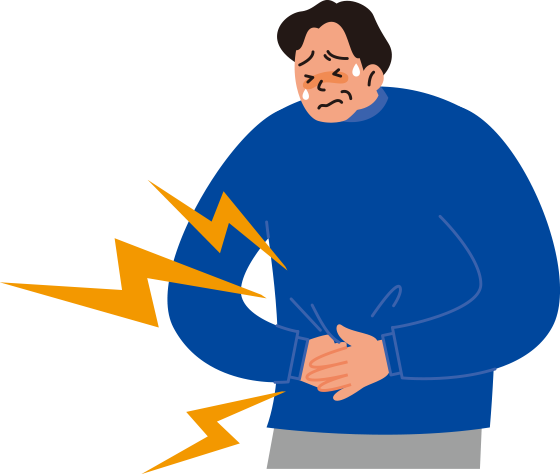
Inflammation of the large intestine, or severe diarrhea caused by such inflammation, may occur. Early symptoms include diarrhea, abdominal pain, and bloody stools.
Typical symptoms
Please contact the hospital if the frequency of bowel movements
increases to 4 or more times a day.
- Higher frequency of bowel movements than usual
- Pasty and mushy or watery stools
- Blood in stools
- Blood in stoolsAbdominal pain
2Interstitial lung disease (pneumonitis)
This is a disease in which inflammation occurs in and around the walls of the alveoli (an organ that draws oxygen from the air into the blood). When inflammation occurs in and around the alveoli, oxygen cannot be drawn into the blood, making it difficult for the person to breathe.
It is important to note that pneumonitis can be life-threatening if it becomes severe.
Typical symptoms
Please contact the hospital immediately if you notice any of the following symptoms.
- Shortness of breath, difficulty breathing
- Coughing (particularly a dry cough without phlegm)
- Chest pains
- Fever

3Liver dysfunction, hepatitis
These are diseases that cause reduced liver function or inflammation of the liver.
Blood test results show liver function test values (such as AST, ALT, γ-GTP, bilirubin, etc.) above the normal ranges.
Typical symptoms
- Yellowing of the skin or whites of the eyes (Jaundice)
- Abdominal pain
- Nausea or vomiting
- More easily fatigued than usual
- Itchy skin
- Bruises easily, difficulty in stopping bleeding
- Yellowish-brown urine

4Severe skin disorders
Severe skin symptoms that spread extensively throughout the body, including the skin and mucous membranes, may occur.
Typical symptoms
- Fever
- Reddening of the skin across an extensive area
- Blistering
- Peeling of the skin or mucous membranes, sores, pain
- Itchy skin
5Thyroid dysfunction
(hypothyroidism, hyperthyroidism)
This is a disease in which inflammation occurs in the thyroid gland, leading to either an excess or a deficiency of thyroid hormones.
Diagnosis is made through blood tests measuring TSH (thyroid-stimulating hormone), FT3/FT4 (thyroid hormones), or other markers.
Typical symptoms
- More easily fatigued than usual
- Weight loss or weight gain
- Palpitations
- Sweating a lot
- Hand tremors
- Mood swings
- Hair loss
- Constipation
- Headache

6Adrenal dysfunction
(adrenal insufficiency)
This is a disease that causes inflammation in the adrenal glands, leading to reduced adrenal function. Diagnosis is made through blood tests measuring the level of adrenal cortex hormones (such as cortisol) secreted by the adrenal glands.
Typical symptoms
- Feeling sluggish
- Feeling faint or losing consciousness
- Reduced blood pressure, dizziness
- Feeling restless or agitated
- Darkening of the skin
- Craving salt
- Nausea or vomiting
- Loss of appetite

7Pituitary dysfunction (hypophysitis)
This is a stage of disease in which inflammation occurs in the pituitary gland that controls hormone function, leading to reduced pituitary function. Diagnosis is made through blood tests measuring the level of hormones secreted by the pituitary gland, such as ACTH (adrenocorticotropic hormone) and TSH (thyroid-stimulating hormone).
Typical symptoms
- Headache
- Feeling sluggish, easily fatigued
- Dry mouth
- Increased volume or frequency of urination
- Difficulty seeing clearly

8Encephalitis, meningitis, myelitis
These are diseases that cause inflammation in the brain, spinal cord, as well as the meninges that cover them.
Typical symptoms
- Fever
- Headache
- Nausea or vomiting
- Neck pain, stiff neck
- Confusion or mental fogginess, unable to think clearly
- Seizures
- Numbness in both legs, difficulty moving both legs
- Fainting (lose consciousness)
9Neuropathy (peripheral neuropathy,
Guillain-Barré syndrome, etc.)
This disease causes inflammation of the nerves, impairing the functions of motor nerves that control muscles throughout the body, sensory nerves that transmit skin sensations, and autonomic nerves that regulate internal organ functions. As symptoms become more severe, it may become more difficult to swallow food or breathe.
Typical symptoms
- Numbness or throbbing pain in hands and feet
- Weakness in hands and feet
- Loss of sensation in hands and feet
- Difficulty grasping objects
- Stumbling when walking
10Myositis, rhabdomyolysis, myasthenia gravis
This disease damages muscle cells, leading to pain and loss of strength.
Blood tests show elevated levels of creatine kinase and myoglobin above the normal ranges.
Typical symptoms
- Muscle pain
- Weakness in arms and legs
- Brown urine
- Nausea or vomiting
11Renal dysfunction, nephritis
This is a disease that causes inflammation in the kidneys, leading to reduced kidney function. Blood tests show elevated levels of creatinine and other markers.
Typical symptoms
- Decreased urine output, difficulty urinating
- Urine is an unusual color
- Pain in the pelvic region
- Swelling, weight gain
- Fever
- Feeling sluggish
- Loss of appetite
12Myocarditis
This is a disease that causes inflammation in the heart muscle (myocardium), leading to reduced heart function. Blood tests show elevated levels of creatine kinase above the normal range.
Typical symptoms
- Feeling sluggish
- Chest pains
- Irregular heartbeat
- Shortness of breath
- Swollen ankles
13Pancreatitis
This is a disease that causes inflammation in the pancreas. Blood tests show elevated levels of amylase and lipase above the normal ranges.
Typical symptoms
- Abdominal pain
- Nausea or vomiting
- Fever
- Back pain
14Type 1 diabetes
The pancreas stop secreting insulin, causing blood sugar levels to rise, potentially leading to the onset of type 1 diabetes. This condition sometimes progresses rapidly, with nausea and vomiting followed by impaired consciousness within days. Treatment with insulin injections may become necessary.
Typical symptoms
- Mouth or throat are prone to dryness
- Drinking more water than usual
- Increased volume or frequency of urination
- Easily fatigued, feeling sluggish
- Nausea or vomiting
- Confusion or mental fogginess
15Severe blood disorders
Reduced platelet count may increase susceptibility to bleeding, red blood cell damage, or severe anemia, while reduced white blood cells or neutrophils may lead to severe infections.
Typical symptoms
- Spotty or patchy bleeding under the skin
- Prone to nosebleeds
- Poor complexion or pale, bluish skin
- Yellowing of the skin or whites of the eyes (jaundice)
- Weakness or lightheadedness
- Easily fatigued
- Fever
Please also refer to the explanatory documents and consent forms.